
 Engrave
Diode Laser Settings
21 community settings from 3 machinesDiode lasers use a blue semiconductor module, usually around 450 nm, on an open-frame or enclosed gantry. They are the most common first laser and do their best work engraving wood, leather, and coated or painted surfaces, and cutting thin wood and dark, opaque acrylic.
Engrave
 Engrave
 Engrave
 Engrave
 Engrave
 Engrave
 Engrave
 Engrave
 Engrave
 Engrave
 Engrave
 Engrave
 Engrave
 Engrave

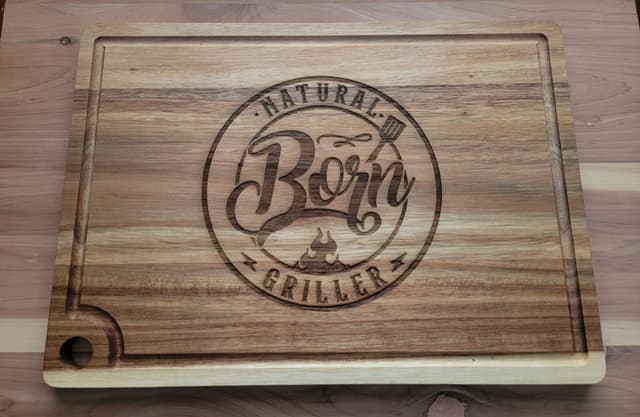 Engrave
Acacia Cutting Board with Drip Ring and Corner Hole
xTool S1 · 40W · Diode
- Engrave210 mm/s25%25%
Jeremy D
 Engrave
 Engrave
 Engrave
 Engrave
 Engrave
 Engrave
What to know about diode laser settings
- Optical vs. electrical watts
- A module sold as "40W" may mean electrical input rather than laser output. Compare settings between machines by optical power, and treat settings from a different module as a rough starting point.
- Color and transparency matter
- Blue light passes through clear and blue materials and reflects off light, shiny surfaces. Diodes can't cut clear acrylic, and white or pale materials often need more power or a darker coating to mark.
- Several passes beat one slow pass
- For thicker wood, multiple faster passes with air assist usually give cleaner edges and less charring than a single slow pass.
- Focus is critical
- Diode spots are larger than CO2 spots, so a small focus error has a big effect. Re-check focus height whenever the material thickness changes.
New to these terms? Read how laser settings work, or convert LPI and line interval with the line density converter.
Before you run these settings
Settings vary between individual machines, even of the same model: lens, focus, alignment, air assist, and the exact material all change the result. Run a small test grid on scrap from the same sheet first, never leave the laser unattended, and never cut PVC or vinyl.